Founded in 2011, Bitstamp is a Luxembourg-based exchange that was acquired by Robinhood in June 2025 for $200 million. It continues to operate under its own brand while being integrated into Robinhood's broader infrastructure and allows users to buy, trade, and stake over 155 cryptocurrencies.
Despite its history, Bitstamp has failed to carve out a substantial market share. By retail trading volume, Bitstamp remains a relatively modest player in the global crypto market. Its exchange volume is primarily institutional rather than retail - as of mid-2025, it served around 500,000 funded retail customers but approximately 5,000 institutional clients. This focus on institutional users, combined with its relatively high fees and limited asset selection, has led many retail investors to seek alternatives.
Here, we take a look at some of the best alternatives to Bitstamp. Each of the four alternatives listed here would be ideal for a specific kind of investor. We compare each platform based on features, fee structure, regulation, and more.
Key Takeaways
- Investors looking at Bitstamp alternatives should focus on ease of use, access to multiple asset classes, and a competitive fee structure.
- Some of the best Bitstamp alternatives include Change, Binance, and Bitvavo.
Why Bitstamp Users Might Want to Look at Other Exchanges
For one, Bitstamp is now fully owned by Robinhood, following a $200 million acquisition completed in June 2025. While the integration is still ongoing, Bitstamp now operates as part of Robinhood's broader ecosystem, which raises legitimate questions for European retail investors.
Robinhood has historically been a US-focused retail trading platform, and its reputation among independent traders was significantly damaged by the 2021 GameStop controversy, where it restricted customers from purchasing GameStop shares at the height of its rally. Whether Robinhood's ownership will affect Bitstamp's independence and European focus remains to be seen.
Furthermore, Bitstamp is a crypto exchange. This means that while the company offers a range of crypto services, it does not provide access to stocks, CFDs, indices, or commodities. In fact, Bitstamp even lacks support for many markets traditionally associated with crypto exchanges, such as an NFT marketplace.
This makes Bitstamp ideal for casual traders focused on trading cryptocurrencies. However, experienced traders who want access to multiple asset classes would require additional platforms to execute their trading strategies. This has caused interest in Bitstamp alternatives to soar, with many investors jumping ship over the last few years.
Best Bitstamp Alternatives for 2026
1. Change

One of Bitstamp’s major advantages is its simplicity for beginners, while still having dedicated features for advanced users. Change is quite similar in this regard, except that it offers much more to investors than Bitstamp.
Main Features: With access to over 500 assets, including 140+ cryptocurrencies and 360+ CFDs, Change makes investing easy.
Its extremely simple interface allows beginner investors to avoid the hassle of complicated charts and invest through the app for a seamless, integrated trading experience. Users can get started with just €10 and access margin, staking (up to 6%), and ETF investing, all in a single mobile app.
Fee structure: While Bitstamp's trading fees can reach 0.4% on Crypto trades and 0.8% on FX trades, Change offers commission-free trades on CFDs and Bitcoin. Altcoins carry a standard 0.1% fee, much lower than the industry average.
Regulation and Security: Change deploys a dual-layer EU regulatory framework. Change holds a MiCA CASP license, which allows it to offer its services across the European Union under one unified regulatory framework - the gold standard for crypto regulation in Europe as of 2026. Change also offers dual-factor authentication and additional security measures (such as fund segregation) to protect its clients.
Ideal For:. You should choose Change over Bitstamp if you want a secure, diversified platform for all your investment needs.
2. Binance
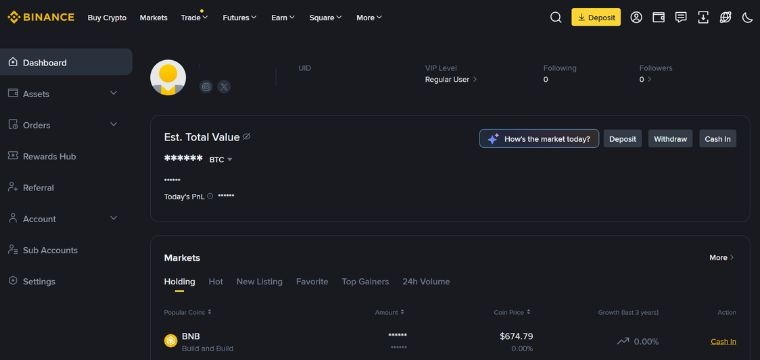
Binance is one of the world’s largest digital asset exchanges, offering an extensive range of digital assets and a host of decentralised applications via its API.
Due to its size, Binance faces extensive regulatory concerns. It has also experienced multiple security breaches through the years. The largest breach occurred in 2019, when over 7,000 Bitcoin were stolen from the exchange.
Main Features: While Binance is a crypto-only firm, it offers almost everything a crypto enthusiast could need. With Binance, users can engage in spot and futures trading (including perpetual futures), staking, lending, and much more.
Fee structure: Binance charges fees that vary by asset and order type. For spot trading, fees generally begin at 0.1%, although investors can access volume discounts. Fees for advanced order types are usually higher, although Binance offers ways to access discounts there as well.
Regulation and Security: Due to its global reach, Binance is regulated by various authorities. In Europe, Binance is racing to secure MiCA compliance ahead of the July 1, 2026, deadline, after which unlicensed platforms risk restrictions or outright exclusion from serving EU users. Binance has submitted an application for a MiCA license through its Greek subsidiary, Binary Greece. Until that license is granted, Binance's long-term availability for European retail investors remains uncertain.
Ideal For: Choose Binance over Bitstamp if you are deeply embedded in the crypto ecosystem and want a single platform that meets all your crypto needs.
3. Trading 212

Trading 212 is perhaps the closest comparison we have to Bitstamp for traditional assets. Just like Bitstamp, Trading 212’s major advantage is its simplicity. However, it suffers from a lack of available assets, and the absence of cryptocurrencies could turn off many investors.
Main Features: Trading 212 offers a user-friendly trading interface for stocks and CFDs. It also offers automated investing through its “Pies”, and high interest on cash balances. It is also one of the few brokerages that support an Individual Savings Account (ISA) in the UK.
Fee structure: Trading 212 offers a commission-free trading structure (with a spread on CFDs). However, its FX fee of 0.15% is significantly higher than those of many competitors.
Regulation and Security: Trading 212 is regulated by multiple European regulatory bodies. This includes the Financial Conduct Authority (FCA) in the UK, German Federal Financial Supervisory Authority (BaFIN) in Germany, and the Cyprus Securities and Exchange Commission (CySEC) in Cyprus.
Ideal For: Investors should choose Trading 212 over Bitstamp if they want a simple, easy-to-use trading app like Bitstamp, but only want to trade stocks and CFDs.
4. Bitvavo
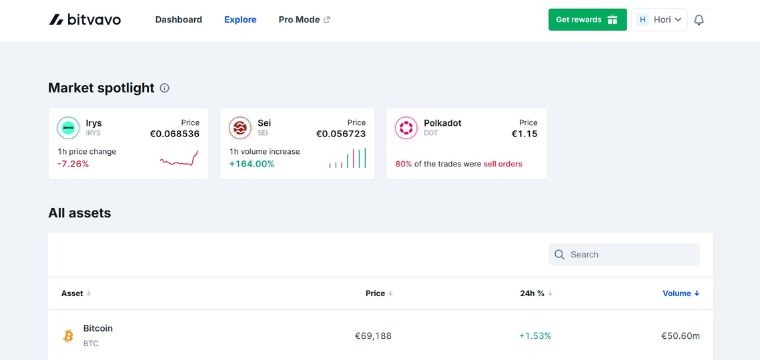
Bitvavo is a European cryptocurrency exchange that specifically caters to active traders. It is not designed with beginners in mind. However, it offers many features that make it ideal for intermediate and expert traders.
Main Features: Bitvavo offers over 400 digital assets on its platform. It also has a highly customizable trading experience. Intermediate traders can opt for a simpler interface, while advanced traders can utilise the “pro mode” to unlock extra features.
Fee structure: Bitvavo has an extremely transparent fee structure, ranging from 0% to 0.25%. This is in line with the industry average, although some platforms offer significantly lower transaction fees for crypto products.
Regulation and Security: Bitvavo is regulated by the Dutch AFM and received its full MiCA CASP (Crypto-Asset Service Provider) authorisation in June 2025, making it one of the first European crypto exchanges to achieve full MiCA compliance. This gives European investors additional confidence in the platform's regulatory standing. The exchange also offers an account guarantee that can reimburse clients up to €100,000 in certain instances.
Ideal For: Bitvavo is worth checking out over Bitstamp for experienced traders who want a professional platform to trade cryptocurrencies. However, investors wanting an all-in-one solution will not be satisfied with the platform.
How to Choose the Best Bitstamp Alternative
There are many factors to consider when choosing a Bitstamp alternative. These include the asset classes you plan to invest in, whether the platform is regulated and secure, and whether it aligns with your investment goals.
- Access to stocks, CFDs, and other assets: Bitstamp offers only cryptocurrencies, so investors looking to expand their horizons beyond digital assets should consider an alternative platform that serves as a one-stop shop for all their needs.
- Robust security measures: Ensuring the platform is regulated by a recognised European authority is crucial. Regulatory oversight is necessary to protect investors.
- Transparent fee structure: Minor differences in fees tend to add up over the long-term. Furthermore, make sure there are no hidden fees. Many platforms offering ‘commission-free trading’ often make up the lost revenue through other means (e.g., FX fees).
- Long-term investment goals: Those just starting on their crypto journey may want to stick with a simple crypto platform, while experienced traders may want more from their trading platform, such as futures trading.
Final Thoughts
In 2026, a diversified investment approach matters more than ever. While crypto has produced strong returns, a well-balanced portfolio that includes traditional assets - stocks, ETFs, commodities, and forex - is key to managing risk over the long term.. As such,
With this in mind, Change seems to be the ideal alternative for Bitstamp users who desire more from their trading. It offers access to stocks, forex, commodities, and CFDs, as well as over 140 cryptocurrencies. Get started with Change for just €10.
Frequently Asked Questions (FAQs)
1. What is the best Bitstamp alternative for advanced traders?
For advanced traders, Change might be the best alternative to Bitstamp. Change offers access to advanced trading tools, derivatives trading, and deep liquidity, making it a better choice for experienced traders than Bitstamp.
2. Does Bitstamp allow Trading bots?
As of 2026, Bitstamp continues to support trading bots via its HTTPS and FIX APIs. However, following the Robinhood acquisition, the direction of Bitstamp's product development may shift toward features relevant to Robinhood's broader ecosystem. However, Bitstamp’s trading bots are not built with copy trading in mind. As such, beginner investors looking to start copy trading should look elsewhere.
3. Which payment methods does Bitstamp support?
Bitstamp supports a bunch of payment methods, including PayPal, Google Pay, Apple Pay, direct crypto deposits, and bank transfers (including international wire transfers and SEPA).
However, unlike some of its alternatives, not all of these payment methods can be used to withdraw funds.
4. Do other crypto exchanges have lower fees compared to Bitstamp?
While fee structures vary by platform and location, Bitstamp seems to have a fee structure that is much less forgiving than its competitors'. Investors looking for a platform with lower fees and a broader range of assets should consider Change.
5. What are some of the notable advanced features of Bitstamp?
Advanced features of Bitstamp include its HTTPS and FIX APIs, a Pro trading terminal with advanced order types and capabilities, and a Pro mode in its mobile app that allows experienced traders to trade from anywhere.