Trading 212 is considered one of Europe’s most well-respected trading platforms. Founded in 2004, Trading 212 has some of the highest ratings among major European brokerages, with people praising its commission-free structure, high security, and trading safeguards.
That said, Trading 212 also suffers from a few shortcomings. Its strongest offering is still in stocks and ETFs. While its CFD account adds access to forex, indices, and commodities, investors looking for a modern multi-asset platform with spot crypto and advanced derivatives may find Trading 212 more restrictive than some of its competitors.
Here, we take a look at five alternatives to Trading 212 that are perfect for both experienced and new investors. These investment platforms offer a higher number of investment options, ranging from international stocks to advanced financial instruments with higher potential returns.
Key Takeaways
- Investors looking for Trading 212 alternatives should look for commission-free trading, a low minimum deposit, a great web platform, and options for a diversified portfolio.
- Our list of alternatives to Trading 212 includes Change, eToro, Interactive Brokers, XTB, and Lightyear.
Why Look for a Trading 212 Alternative?
Trading 212 is a great platform for a certain kind of investor. It offers commission-free stock trading, an individual savings account, interest on uninvested cash, and lower FX fees compared to some of its competitors.
However, the modern investing landscape is much more dynamic than just buying and selling stocks. There are sophisticated trading platforms out there that allow you to trade everything from US stocks to indexes and cryptocurrencies.
Modern-day smart portfolios should be invested in multiple financial instruments to maximise returns. This is not possible with Trading 212, as it limits your options to mainly stocks and ETF investing.
Our list of the best Trading 212 alternatives takes a look at legal, EU-regulated platforms that offer much greater flexibility and ease-of-use, making them perfect for everyone from day traders to retail investors looking to build wealth.
Best Alternatives to Trading 212
1. Change

Change’s offerings include retail CFD accounts, cryptocurrency trading, ETFs, indices, and forex. Its simple interface makes it ideal for beginner investors while still offering advanced features for experienced traders.
Key features: Change can be a one-stop shop for most beginner and intermediate investors. With over 360 CFDs and more than 140 cryptocurrencies, Change makes it easy to invest via its fast and intuitive mobile app.
Traders can get started with a minimum deposit of €10 and access leverage of up to 30x on CFDs and forex and up to 20x on commodities. Staking crypto is also possible. While Trading 212 offers competitive interest on uninvested cash-such as 4.6% on GBP, 4.1% on USD, and 3% on EUR, Change focuses on crypto staking yields, offering up to 6% APY on selected coins for investors comfortable with crypto risk.
Fees & Pricing: Just like Trading 212, Change offers commission-free trading on Bitcoin and fiat currencies. It also has a flat 0.1% fee for altcoin trading, much lower than the industry average. There are no account fees or hidden fees on Change, with any additional fees disclosed upfront.
Security & Regulation: Change now operates under a unified European framework. Change Securities B.V. is authorised by the Dutch Authority for the Financial Markets (AFM) as both an investment firm and a MiCA crypto‑asset service provider (CASP), allowing it to offer regulated investment and crypto services across the EEA under harmonised EU rules.
Best For: Change is ideal for all kinds of investors. Investors should choose Change over Trading 212 if they want a general investment account that can easily diversify across traditional and alternative assets.
Pros and Cons
2. eToro
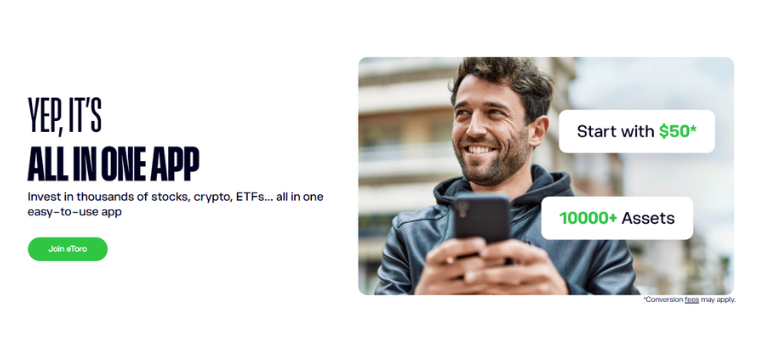
eToro is an all-in-one financial app that allows users to invest, save, and spend. It is great for social traders who want to use copy trading to replicate the moves of top traders. However, its fee structure leaves a lot to be desired.
Key features: eToro offers access to over 20 global exchanges, crypto, mutual funds, and forex. Unlike traditional brokers, eToro offers both actual stock and CFD trading. The eToro money account, fully integrated within the app, also allows for easy deposits, withdrawals, and currency conversions.
Fees & Pricing: eToro’s platform fees are generally higher than many low-cost competitors. As of 2026, it charges a flat commission of around $1-$2 per stock trade depending on the region, and a 1% fee on opening and closing crypto trades. Investors should also watch out for non-trading costs, such as inactivity fees on dormant accounts, spreads, and withdrawal charges.
Security & Regulation: eToro is regulated by various agencies across the world. This includes the FCA in the UK, CySEC in Europe, and the SEC in the US.
Best For: Investors should choose eToro over Trading 212 if they don’t have a particular investment strategy and want to replicate what the pros are doing through the social trading feature.
Pros and Cons
3. Interactive Brokers
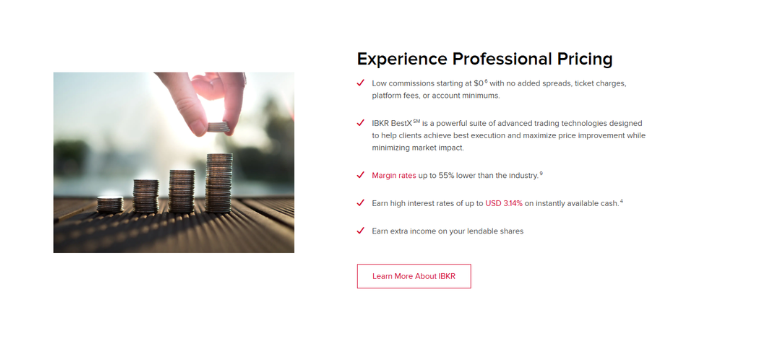
Interactive Brokers is a great option for experienced investors who want access to a global trading platform. Interactive Brokers was founded in 1978 and is considered one of the largest online trading platforms in the world.
Key features: Interactive Brokers offers all the asset classes in our last two picks and adds access to prediction markets as well. IB also has educational resources for investors and a suite of options for institutional traders.
Fees & Pricing: Interactive Brokers offers commission-free trading in certain cases. However, investors will be required to pay a fee for most assets, with fees usually starting from $1 per transaction and going all the way to 3% for mutual funds. There are no inactivity fees.
Security & Regulation: Interactive Brokers is heavily regulated globally. The Central Bank of Ireland is its main regulatory authority in Europe, with the FCA regulating the company in the UK. The brokerage is also regulated by the SEC and FINRA in the US.
Best For: Investors should choose Interactive Brokers over Trading 212 if they have larger portfolios that would benefit from extensive diversification and not be particularly affected by the broker’s relatively high fee structure.
Pros and Cons
4. XTB
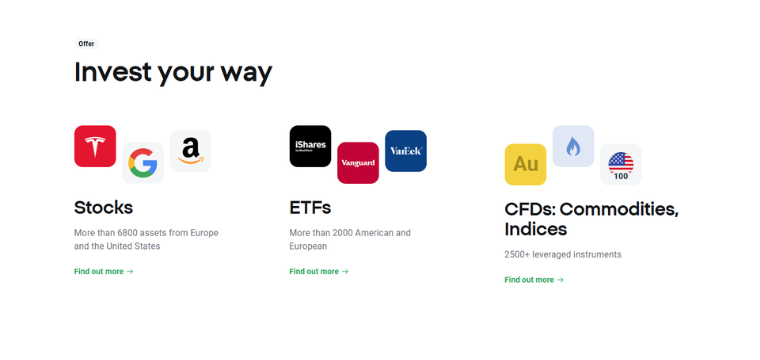
XTB was founded in 2002 with the intention of serving day traders. Its investment services primarily revolve around frequent trading, with a fee structure that best serves traders who like to enter and exit positions quickly.
Key features: XTB offers stocks, ETFs, and CFDs on forex, indices, and commodities. While it lacks futures trading, it allows users to set up automated investment plans that are ideal for beginner investors.
Fees & Pricing: XTB offers commission-free stock and ETF trading up to a monthly turnover of €100,000 (a 0.2% commission applies thereafter). While bank transfers are free, card deposits are not, investors need to watch out for a 0.5% currency conversion fee and a €10 monthly inactivity fee applied after 12 months of no trading and holding any assets.
Security & Regulation: XTB is regulated by a multitude of agencies worldwide. In Europe, it is primarily regulated by the Cyprus Securities and Exchange Commission (CySEC). It is also regulated by the KNF in Poland and the FCA in the UK.
Best For: You should choose XTB over Trading 212 if you are a beginner day trader without a lot of capital. This should allow you to trade without commission and make use of the educational resources on the platform.
Pros and Cons
5. Lightyear
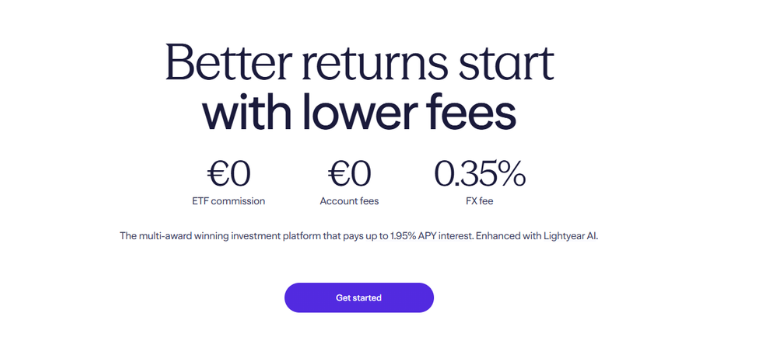
Lightyear is an independent European brokerage that partners with BlackRock to offer low-cost money-market funds alongside simple, low-fee investing. Providing both savings and investment plans, Lightyear is great for investors who want access to low-cost investing, fractional shares, and automation.
Key features: Lightyear offers retail investor accounts with access to over 6,000 stocks, ETFs, and money-market funds. It also features ready-made plans built around BlackRock and Vanguard funds, plus savings products, although its cash interest rates are generally lower than the top offers currently available at Trading 212.
Fees & Pricing: Lightyear has a low-cost fee structure. Individual stock trades usually cost 0.1%, but can only reach a maximum limit of €1/$1. However, the foreign exchange fees on Lightyear are 0.35% for European customers, while UK investors benefit from a lower 0.1% rate..
Security & Regulation: Lightyear is authorised to operate across the EU and EEA. It is regulated by the Estonian Financial Supervision Authority (EFSA).
Best For: It is better to choose Lightyear over Trading 212 if you primarily plan to invest in its ready-made plans and low-cost stock and ETF trades. Lightyear offers very competitive fees for buy-and-hold investors, though its overall asset universe is smaller than Trading 212’s and focused on listed securities rather than CFDs.
Pros and Cons
How to Choose a Trading 212 Alternative
Here are the most important factors to keep in mind when looking at Trading 212 alternatives:
- Make sure your trading platform is licensed with a recognised EU authority. This ensures your funds have proper protection.
- Even small differences in the fees can have a significant long-term impact. It is important to watch out for FX fees, which are usually higher than trading commissions.
- Consider whether you want to do your own research or follow expert advice. Readymade plans or copy trading can sometimes be a better option for long-term investors.
- The best trading platform for you is the one that caters to all your needs. Make sure the investment options offered align with your long-term investment goals.
Final Thoughts
Modern investment strategies demand diversification across multiple asset classes. As such, sticking to a platform that only offers stocks or ETFs is no longer feasible for many retail traders. With this in mind, there are a lot of alternatives to Trading 212 that could whet your investing appetite.
Change is built with the modern investor in mind. With access to more than 140 cryptocurrencies and over 360 CFDs across stocks, indices, forex, and commodities, users can begin investing with Change for as little as €10.
Frequently Asked Questions
1. Which Trading 212 alternatives offer the lowest fee?
The Trading 212 alternatives with the lowest fees include Change, which offers commission-free trading on select assets and fees as low as 0.1% on cryptocurrencies. Other low-cost platforms may advertise zero commissions, but often charge spreads, FX fees, or inactivity fees.
When comparing Trading 212 alternatives, always evaluate the total cost of trading, not just headline commissions.
2. Do Trading 212 alternatives offer fractional shares?
Yes, most Trading 212 alternatives offer fractional shares, allowing investors to buy portions of stocks instead of full shares. This makes it easier to invest in high-value companies with smaller amounts of capital.
Platforms like eToro and Lightyear support fractional investing, making them accessible options for beginners building diversified portfolios.
3. Are Trading 212 alternatives legal and safe to use?
Trading 212 alternatives are legal and safe to use if they are regulated by recognised financial authorities such as CySEC, the FCA, or EU regulators. Regulation ensures investor protection, fund segregation, and compliance with financial standards.
For example, Interactive Brokers and Change both operate under established regulatory frameworks, making them reliable choices for European investors.
4. Which is the best Trading 212 alternative for beginner investors?
The best Trading 212 alternative for beginner investors is Change, thanks to its simple interface, low minimum deposit, and access to multiple asset classes. It allows new investors to diversify across crypto, CFDs, and other markets from one platform.
Other beginner-friendly options include XTB for active trading and Lightyear for long-term investing.