Binance is the world’s largest crypto trading platform, which handles over one-third of all global spot crypto trading. The platform is known for its deep liquidity, advanced trading features, and broad cryptocurrency listings. However, the ongoing controversies and intense regulatory scrutiny around regulation have forced investors to look for Binance alternatives in 2026.
Since 2022, Binance has been in the spotlight amid a series of high-profile events, including a €3.3 million fine in the Netherlands for handling cryptocurrency-denominated transactions, a massive flash crash in October 2025, and persistent regulatory pressure.
Additionally, Binance’s complex trading interface has been overwhelming for simple investors and some countries have restricted or banned the platform at various points. As a result, European investors are increasingly weighing Binance alternatives as crypto adoption continues to grow.
Here, we take a look at five Binance alternatives that are perfect for both beginner and experienced traders. These investment platforms offer a wider range of investment options, from international stocks to advanced financial instruments with higher potential returns and competitive trading fees.
Key Takeaways
- Several EU-regulated platforms offer safer, simpler Binance alternatives, including options for crypto, stocks, and CFDs in one place.
- The best Binance alternatives for EU users depend on your goals: ease of use, regulatory clarity, trading fees, margin trading, asset range, and trading strategies all matter.
What to Look for in a Binance Alternative
Switching platforms is worth doing carefully. Moving from one imperfect option to another doesn't solve anything. Before committing, EU investors should evaluate a few non-negotiable criteria.
Regulatory status is the starting point. In the EU, look for platforms licensed under the Estonian Financial Intelligence Unit (FIU) for crypto services, or regulated by the AFM or DNB in the Netherlands for CFD and investment products.
These licences indicate the platform operates under enforceable EU financial law, which means real protections for your funds.
Ease of use, fee structure and advanced trading features are also crucial factors when choosing a crypto trading platform. A platform that takes hours to understand will discourage consistent investing, and consistency is one of the most important factors in long-term wealth building. If the interface isn't intuitive on mobile, that's a meaningful drawback for anyone investing on the go.
Top Binance Alternatives for 2026
1. Change
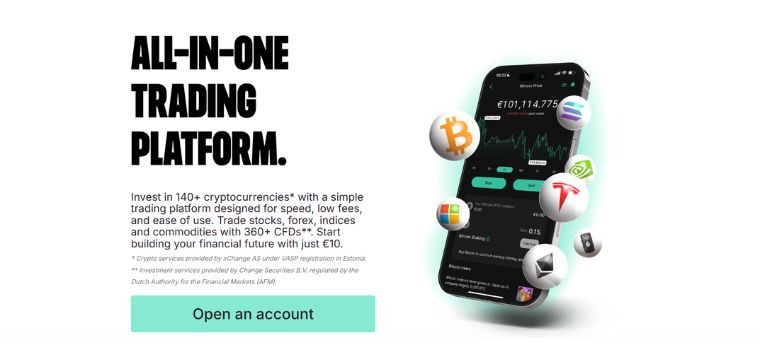
Change stands out as one of the most complete Binance alternatives available to EU investors right now. The platform recently achieved a major milestone by securing a license under the EU’s Markets in Crypto-Assets (MiCA) regulation from the Dutch Authority for the Financial Markets.
Securing the MiCA license allows crypto platforms to offer their services across the European Union under one unified regulatory framework.
Key features: The platform gives investors access to over 140 cryptocurrencies, alongside margin trading in stock CFDs, index CFDs, commodities, and forex, all from a single, mobile-first app.
Unlike Binance, which requires separate accounts for crypto and traditional markets, Change consolidates everything, crypto, stock CFDs, commodities, and forex, into a single regulated app. For EU investors who want a diversified portfolio without the operational overhead of managing multiple platforms, that's the core reason to switch.
The interface is deliberately simple: no overwhelming charts, no complex order panels, no feature overload. Deposits are instant, pricing is clearly displayed, and support is available in English, Estonian, Czech, and Slovak, covering the platform's core EU markets. It also provides a wide range of educational resources for users.
Fees & Pricing: Change offers competitive trading with a low 0.1% fee on over 140 altcoins. Furthermore, Bitcoin trading is entirely commission-free (only a variable spread applies), unlike on Binance. There are no account or hidden fees on Change, and any additional costs are disclosed upfront.
Additionally, buying and selling are commission-free, with a variable margin spread in effect. There are no account or hidden fees on Change, and any additional trading fees are disclosed upfront.
Security & Regulation: The recent milestone of a license under the EU’s Markets in Crypto-Assets (MiCA) regulation from the Dutch Authority for the Financial Markets has been a major upgrade for Change.
While Binance has faced restrictions in several EU markets, including the Netherlands and Germany, Change's full MiCA licence gives EU investors confidence that the platform operates within a framework built to last, with no regulatory uncertainty, no surprises.
Best For: Change is one of the best crypto trading platforms in Europe, made to suit all kinds of investors. Both new and experienced traders who want a simpler interface than Binance and access to diversified assets should choose Change. Additionally, Change’s advanced trading tools, like crypto staking and recurring buys, help investors earn passive income and automate their investments.
Pros and Cons
2. Kraken
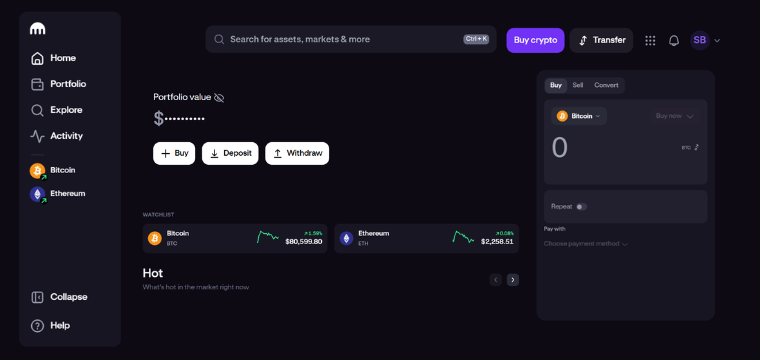
Kraken is one of the oldest crypto exchanges, founded in 2011, and launched even before crypto became mainstream. It's a solid option for investors who prioritise platform longevity and security above all else.
Key Features: Kraken offers access to 600+ cryptocurrencies, including popular coins like BTC, ETH, SOL, and XRP and the futures market. Its Kraken Pro mode gives more active traders access to advanced tools like charting and order types. It also provides a wide range of educational resources for users.
Fees: On Kraken Pro, volume-based fees start at 0.25% for makers and 0.40% for takers for lower volumes, scaling down to 0% maker fees for elite institutional traders. Standard instant buy trades incur higher fees, typically 1% plus a spread. Deposit and withdrawal fees vary depending on the method and currency used.
Security & Regulation: Kraken operates as a highly regulated exchange in Europe, holding MiFID II licenses in Cyprus and MiCA registration from the Central Bank of Ireland. Features include Proof of Reserves, 95% of assets in cold storage, and institutional-grade security.
Ease of Use: The standard Kraken interface is relatively approachable for beginners, though switching to Kraken Pro significantly increases complexity. The mobile app is functional but not as streamlined as platforms built primarily for new investors.
Best For: More experienced crypto investors who want a long-established exchange with strong security standards and advanced trading options.
Pros and Cons
3. Bitvavo
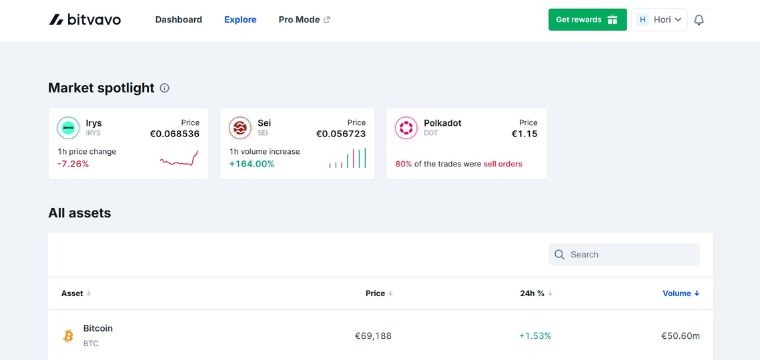
Founded in 2018, Bitvavo is a Netherlands-based crypto exchange that has grown quickly across the Netherlands and Germany. Registered with MiCAR license from the Dutch Authority for the Financial Markets (AFM), it offers a relatively clean user experience and decent liquidity on major crypto pairs.
Key Features: Bitvavo supports over 300 cryptocurrencies and provides a straightforward buy/sell interface suited to everyday investors. It offers basic staking on select assets and has a simple recurring buy feature. The platform is available on mobile (iOS and Android) and as a web-based app.
Fees: Bitvavo uses a transparent maker-taker fee model, with trading fees ranging up to 0.25% for takers, which decrease significantly as your monthly trading volume increases. Bank transfer deposits are free; card deposits may incur additional fees. No monthly subscriptions required.
Security & Regulation: Bivato licensed Crypto-Asset Service Provider (CASP) under the Markets in Crypto-Assets Regulation (MiCAR). The domestic license is issued by the Dutch central bank, De Nederlandsche Bank (DNB), and ensures that Bitvavo complies with MiCAR regulations on crypto-asset services.
The majority of cryptocurrency assets on the platform are stored in cold wallets and also require two-factor authentication. Since its launch, there haven't been any big security incidents.
Ease of Use: Bitvavo has a clear, easy-to-use interface, making it an acceptable choice if you are looking for a starting point to buy cryptos in the Netherlands or nearby countries.
Best For: Investors in the Netherlands or Germany who want a regulated, no-frills crypto exchange with low fees and a straightforward mobile experience.
Pros and Cons
4. Coinbase
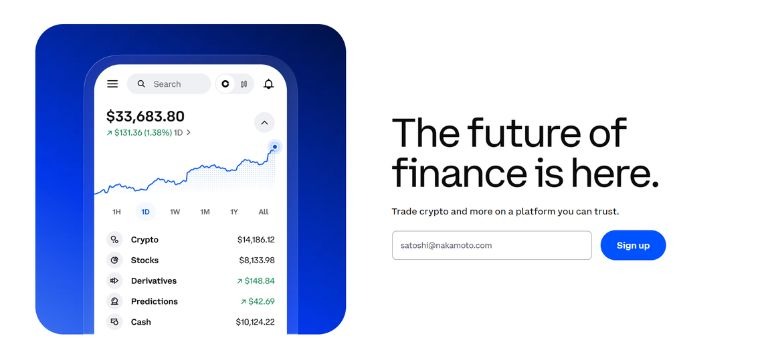
Known as one of the biggest crypto platforms worldwide, Coinbase has not only secured multiple regulatory approvals across numerous EU member states but also built a strong brand based on accessibility and trust. It is one of the first platforms that new crypto investors encounter.
Key Features: Coinbase enables users to access a robust selection of major and mid-cap coins. It features a simplified buy/sell interface targeted toward beginner investors. It offers a simple recurring buy function and the ability to stake certain assets. It has a clean, intuitive layout and is accessible on both iOS and Android.
Fees: Coinbase's fees are among the higher end for EU retail investors. Standard transactions in the basic app carry a spread plus fees that can range from 1.49% to 3.99%. However, the Coinbase Advanced Trade interface offers more competitive fees starting at 0.40% (maker) and 0.60% (taker) for new users.
Security & Regulation: Coinbase Financial Services Europe Ltd is authorised and regulated by the Cyprus Securities and Exchange Commission to operate as a Cyprus Investment Firm. It stores the majority of user funds in cold storage and maintains a strong compliance infrastructure. Its public listing adds an additional layer of financial transparency.
Ease of Use: Coinbase's main app is genuinely beginner-friendly and arguably among the most accessible crypto interfaces available. The onboarding flow is smooth, and educational content is built into the app. However, it remains a crypto-only platform, so active traders looking to manage stocks, CFDs, or commodities alongside crypto will need separate accounts elsewhere.
Best For: First-time crypto investors who want a globally recognised, beginner-friendly platform and prioritise brand trust over fee efficiency.
Pros and Cons
How to Switch From Binance to a New Platform
If you take a structured approach, the move is generally straightforward. The entire process usually takes less than an hour for most investors.
The first thing you should do is open your account and check it on the new platform. With the integration of Changeinvest, the signup process is quick and mobile-friendly, taking only a few minutes. Once you have verified it, withdraw any of your crypto from Binance to your wallet or to the deposit address on your new platform, keeping in mind which assets are supported.
If you have EUR in your Binance account, withdraw it to your bank account before starting the closure. Get a copy of your complete transaction history on Binance. You will require it for tax purposes in all EU jurisdictions, and it may be required to complete annual filings in others.
Final Thoughts
If Binance has started to feel like a poor match, whether that's due to regulatory issues, a complicated interface, or just wanting a platform designed for the ordinary European investor, there are more efficient solutions today.
Top platforms like Change offer over 140 cryptocurrencies, multi-asset trading, automated recurring purchases, and crypto staking with up to 6% returns, all in a simple, mobile-first app built for both beginner and experienced traders. Fees are clear and entirely free from EU regulators, and you only need €10 or even less to start.
Frequently Asked Questions
1. What is the best Binance alternative for EU investors?
Change is the strongest pick: EU-regulated, multi-asset, and beginner-friendly interface.
2. Is Binance still available in Europe?
Binance operates in some EU countries but lacks a full MiCA licence and has been restricted in the Netherlands, Germany, and Poland.
3. Which Binance alternative has the lower trading fees?
Change offers the lowest fees around 0.1% for altcoins and is free for Bitcoin, with zero deposit fees and transparent spread-based pricing.
4. Can I withdraw from Binance directly to another exchange?
Yes, just verify the wallet address, select the correct network, and send a small test transaction first.
5. What are the most regulated cryptocurrency exchanges in Europe?
Platforms licensed under the Estonian FIU, Dutch DNB/AFM, or holding a full MiCA licence, including Change, Kraken, and Bitvavo, offer the strongest EU regulatory standing.
6. Is it better to use one platform for crypto and stocks, or separate platforms?
One multi-asset platform is simpler, cheaper, and easier to manage than splitting across multiple accounts.