Artificial intelligence (AI) is reshaping entire industries, with models expanding faster than the technology boom of the 2000s. This wave is also hitting the stock market, with AI-related stocks rising
From chip designers and semiconductor manufacturers to cloud providers and software developers, these businesses form the backbone of the AI ecosystem and are helping drive the next wave of technological innovation.
Key Takeaways
- The AI industry relies on a multi-layered supply chain spanning chip designers, foundries, cloud providers, and AI software platforms.
- Key players include Nvidia, AMD, TSMC, Alphabet, Amazon, and Palantir, each occupying a distinct role in the ecosystem.
What Is the AI Supply Chain?
It is an interconnected ecosystem working in layers. Training a large language model, for example, requires thousands of specialised processors, vast amounts of memory, sophisticated cooling systems, and enormous cloud infrastructure.
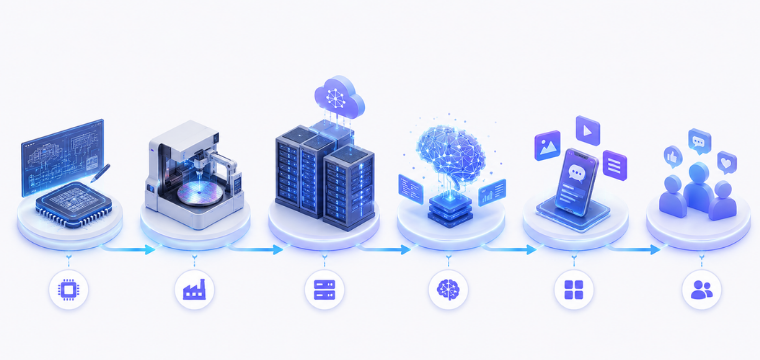
At its most basic, the AI supply chain flows like this:
- Semiconductor Equipment Manufacturers: Build the tools that make chip fabrication possible.
- Chip Designers: Create the processors and networking hardware that power AI computations.
- Foundries: Foundries use those tools to manufacture the chips designed by fabless semiconductor companies.
- Cloud Providers: Deploy this hardware inside data centres to deliver AI services globally.
- AI Software Platforms: Build the models and applications that sit on top of all this infrastructure.
This explains why demand is not just in one or two companies but in an entire ecosystem that powers the AI boom. Understanding these layers makes it easier to identify the tech stocks that stand to benefit most from the continued growth of AI.
AI Chip Designers: The Companies Creating AI Processors
The chip design industry is where much of the AI investment has concentrated.
AI chip designers create the specialised processors that power AI training and inference. Every AI model, from chatbots to autonomous systems, relies on high-performance chips capable of processing massive amounts of data at incredible speeds.
As AI workloads become more complex, demand for faster and more efficient processors continues to rise.
These companies create the processors that make AI computationally possible, though most do not manufacture chips themselves. Instead, they focus on architecture and outsource fabrication to specialist foundries.
NVIDIA: AI GPUs
NVIDIA has become one of the most popular names in the stock market and in the AI technology sector.
Even people who don't know much about tech have heard about NVIDIA’s GPUs. Its graphics processing units (GPUs), originally developed for gaming, turned out to be exceptionally well-suited for the parallel processing demands of AI training and inference. The H100, Blackwell and next-generation Rubin GPU architectures have become the go-to hardware for the world's largest AI developers.
The company serves industries ranging from healthcare to autonomous vehicles, with AI accelerating its reach across them all.
Why it matters: Without Nvidia's GPU architecture and software ecosystem, training the large language models behind today's AI tools would not be feasible at the scale we see. It is the closest thing the AI industry has to indispensable hardware.
AMD: AI Accelerators
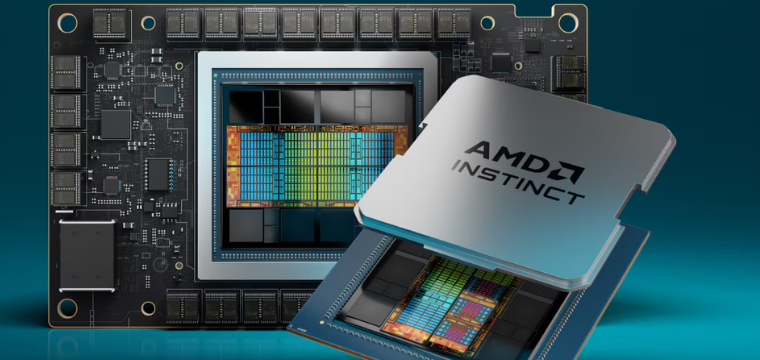
AMD is another big player in the AI chip space. Its Instinct MI300X and MI350 series GPUs are being adopted by cloud providers and AI research labs looking for alternatives to Nvidia's hardware. AMD also benefits from AI demand through its EPYC server processors, which are widely used in data centres running AI workloads.
The company offers a credible alternative to NVIDIA, which matters both to the economics of AI and to the resilience of the wider ecosystem.
Broadcom: AI Networking Chips
Broadcom might not grab many headlines in the AI technology sector, but it plays an equally important role in AI infrastructure.
Its networking chips and custom AI accelerators, known as XPUs, are used by major hyperscalers to build their own AI hardware. Companies like Google and Meta work with Broadcom to develop application-specific integrated circuits (ASICs) for AI, reducing dependence on general-purpose processors.
Why it matters: As the largest tech companies build proprietary AI chips to reduce their reliance on Nvidia, Broadcom is the partner helping them do it. Its role in custom AI silicon and data centre networking makes it a critical enabler behind the scenes of the AI buildout.
Qualcomm: Edge AI
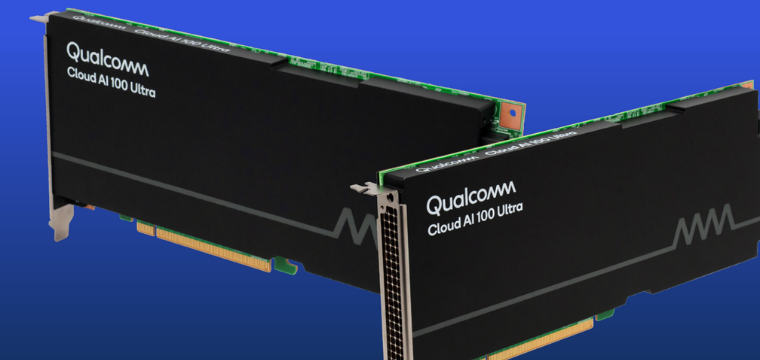
Qualcomm is the company bringing AI to users on-device, in real time, without internet dependency.
It is focused on bringing AI to the edge, meaning smartphones, laptops, and connected devices rather than centralised data centres.
Why it matters: Its Snapdragon platform powers on-device AI across hundreds of millions of Android devices, and the company is investing heavily in AI PC processors designed to handle AI tasks locally without requiring cloud connectivity.
Marvell Technology: Data Centre Connectivity
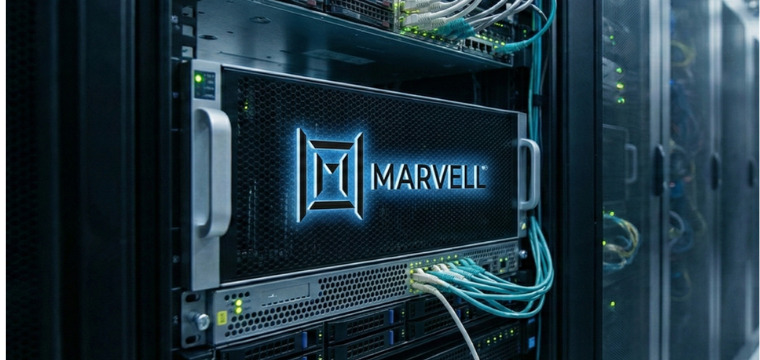
Marvell specialises in the infrastructure that connects components inside AI data centres. Its custom silicon and networking solutions help data centres move data at the speeds required by large-scale AI workloads. As AI clusters grow in size, the importance of high-speed internal networking, Marvell's core business, only increases.
Why it matters: Marvell's connectivity chips enable thousands of processors to work together as a single system, making them an essential yet underappreciated part of modern AI infrastructure.
Micron Technology: AI Memory
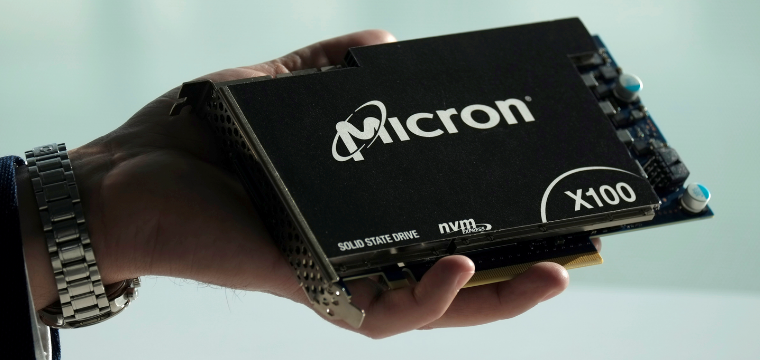
Micron is one of the leading manufacturers of High Bandwidth Memory (HBM), which is stacked alongside AI GPUs to feed them data quickly enough to prevent processing bottlenecks. As AI chip capacity expands, demand for HBM scales with it.
Why it matters: A GPU with insufficient memory bandwidth is like an engine with a fuel line too narrow to keep up. Micron's HBM technology is what allows AI processors to reach their full potential, and as models grow larger and more complex, the memory challenge becomes more acute, not less.
Intel: AI Computing Hardware
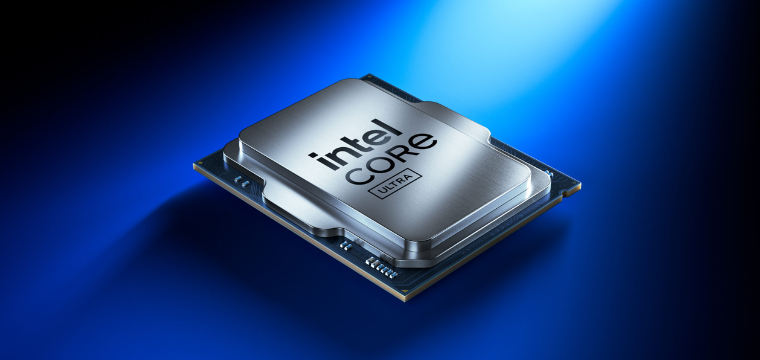
Intel has faced a challenging few years in the AI accelerator market, but it remains a significant force in server hardware through its Xeon processors. The company has also developed its Gaudi 3 AI accelerators, designed to compete in AI training and inference workloads, though adoption has remained limited compared to Nvidia and AMD. Intel's broad presence in enterprise computing means it continues to be part of the AI infrastructure conversation.
Why it matters: Intel's scale and long-standing enterprise relationships mean it remains embedded in a large portion of the world's existing server infrastructure. Even as it competes for next-generation AI hardware share, its footprint in the current installed base gives it relevance across the AI transition.
AI Manufacturing: The Companies Building AI Chips
Most chip designers are "fabless"; they design chips but outsource the physical manufacturing to specialist foundries. This segment of the AI supply chain requires extraordinary capital investment and highly advanced engineering capabilities. Very few companies in the world can do it at scale.
Taiwan Semiconductor Manufacturing Company (TSMC)
TSMC is the single point through which nearly all cutting-edge AI chips must pass. It is the world's largest dedicated chip foundry, manufacturing the semiconductors designed by nearly every major AI chip company, including Nvidia, AMD, Apple, and Qualcomm. Without TSMC's advanced manufacturing capabilities, the current generation of AI chips simply could not exist.
The company serves more than 500 customers and manufactures over 11,500 different products across its process nodes. Its 3nm and 2nm fabrication technology, with 2nm expected to reach volume production in 2025–2026, represents the foundation on which today's most powerful AI processors are built.
Why it matters: No other foundry can match TSMC’s process technology at scale, which makes it arguably the most strategically important company in the entire AI supply chain.
Applied Materials
Applied Materials operates one layer back from the chip itself, as it makes the machines that make the chips.
Applied Materials manufactures the equipment used to produce semiconductor chips. Every advanced foundry, including TSMC, relies on Applied Materials' deposition, etching, and inspection tools to fabricate chips at the nanoscale. As the AI industry drives demand for more advanced chips, it simultaneously drives demand for the equipment required to manufacture them.
Why it matters: This position means it benefits from every new generation of AI hardware, regardless of which chip designer or foundry ultimately wins the race for AI silicon dominance.
AI Infrastructure: The Technology Supporting AI Workloads
Beyond the chips themselves, AI depends on a vast physical and digital infrastructure. Data centres housing thousands of AI processors require specialised power systems, advanced cooling technology, high-speed networking, and large-scale storage.
The scale of this buildout is significant. According to the International Energy Agency, global data centre electricity consumption is projected to more than double by 2030, driven in large part by the growing demands of AI workloads.
High-bandwidth memory, fast interconnects, and power efficiency are increasingly important design considerations for AI infrastructure, all areas that companies like Micron, Marvell, and Broadcom are focused on solving. The AI infrastructure challenge isn't just about raw computation; it's about moving data reliably and efficiently at a massive scale.
Big Tech Companies Funding the AI Race
The chip and foundry ecosystem provides the hardware foundation, but it's the large technology companies that are directing the capital flows and defining the direction of AI development. These companies are simultaneously customers of AI hardware, developers of AI models, and providers of AI services to the wider economy.
Three companies in particular represent the most prominent positions in this layer of the AI supply chain:
Alphabet (Google)

Alphabet sits at nearly every layer of the AI stack simultaneously, it funds research, builds hardware, operates cloud infrastructure, and deploys consumer-facing AI products at a scale few companies can match.
Alphabet is both a major consumer of AI infrastructure and a developer of some of the world's most advanced AI models. Google DeepMind has produced model families such as Gemini that power products used by billions of people. Alphabet also develops its own AI chips, Tensor Processing Units (TPUs), and operates Google Cloud, which provides AI compute and services to enterprises worldwide.
Amazon

Amazon's primary AI infrastructure play is through Amazon Web Services (AWS), the world's largest cloud platform. AWS provides the computing power that many AI companies use to train and deploy their models.
Amazon is also investing in its own AI chips, Trainium for training and Inferentia for inference, to reduce reliance on third-party hardware as AI demand scales. AI also runs throughout Amazon's e-commerce and logistics operations, from demand forecasting to warehouse automation.
AWS is the infrastructure backbone for a large share of the AI industry. Many of the AI tools and products people use daily are running on AWS behind the scenes. Amazon's scale in cloud computing makes it a structural beneficiary of AI adoption, regardless of which AI models or applications ultimately win market share.
Palantir

Palantir occupies a different position in the AI ecosystem. Rather than building chips or cloud infrastructure, it develops AI software platforms that governments and large enterprises use to analyse complex data and make operational decisions.
Its Artificial Intelligence Platform (AIP) has been one of the most commercially discussed enterprise AI products in recent years, with the company securing contracts across defence, intelligence, healthcare, and commercial sectors in the United States and Europe.
The AI Company Landscape at a Glance
How Traders Can Trade AI-Related Stocks
For traders interested in the AI sector, one of the simplest routes is through Contracts for Difference (CFDs) on individual company stocks.
CFD is a financial instrument that allows you to trade the price movement of a stock without owning the underlying shares. You can access major AI-related companies from a single platform rather than needing separate brokerage accounts in different markets.
Experienced traders can use leverage to increase profit potential, but improper use can lead to significant losses.

CFDs are complex instruments and come with a high risk of losing money rapidly due to leverage. 60% of retail investor accounts lose money when trading CFDs with this provider. You should consider whether you understand how CFDs work and whether you can afford to take the high risk of losing your money.
Bottom Line
The AI revolution is being built on a global ecosystem of companies spanning chips, cloud, and software. Understanding this supply chain gives traders a clearer picture of where value is being created and why demand flows across so many different businesses at once.
For traders seeking exposure to this sector, those companies are now accessible on a single platform. Change offers CFD trading on AI-related stocks, including all the major players discussed in this article, as well as crypto and other asset classes.
Frequently Asked Questions
What companies are leading the AI boom?
NVIDIA, AMD, TSMC, Alphabet, Amazon, and Palantir are the leading companies powering the AI boom across chips, manufacturing, cloud, and software.
What is the AI supply chain?
The AI supply chain spans semiconductor equipment, chip foundries, chip designers, cloud providers, and AI software platforms, all working together to deliver AI.
Why are GPUs important for artificial intelligence?
GPUs process thousands of operations simultaneously, making them ideal for AI training and inference tasks that traditional CPUs cannot handle efficiently at scale.
What role does TSMC play in AI development?
TSMC manufactures the advanced chips designed by Nvidia, AMD, and Qualcomm. Without TSMC's foundries, today's most powerful AI processors could not be produced.
How can traders get exposure to AI companies?
Traders can access AI-related stocks through CFD trading on platforms like Change, without owning shares directly.