CFDs and futures are two ways traders can access high leverage in financial markets easily. While both allow you to speculate on the price of an underlying asset, there are many differences between the two. Here, we explain how CFDs and futures differ, and which one of them is right for you.
Key Takeaways
- CFDs are contracts that allow you to trade on the price of an underlying asset without owning it, offering flexible position sizes and no fixed expiry dates. Regulation varies by region - in the EU, CFDs are strictly regulated under ESMA rules.
- Futures contracts are large-scale financial derivatives traded on centralised exchanges with high regulation and fixed contract sizes.
What is CFD Trading?
A Contract for Difference (CFD) allows traders to speculate on the price movements of an asset or security without owning the underlying asset. A CFD is essentially an agreement between you and your broker to trade the difference between the opening and closing price of your position.
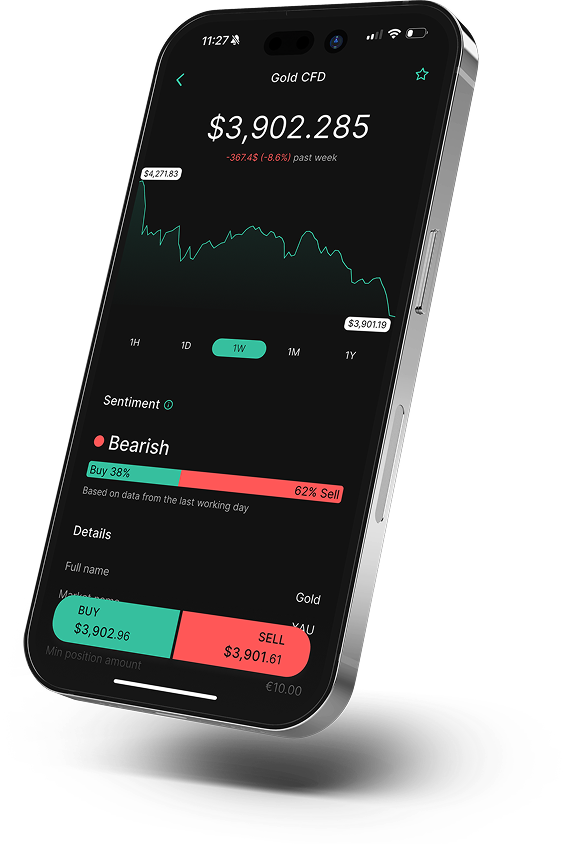
CFDs are traded OTC (over-the-counter), meaning they are not listed on a centralized exchange. Instead, brokers act as the counterparty and quote prices that are derived from, but not directly tied to, the underlying market. This gives brokers some discretion over pricing, which is why spread and slippage can vary between providers.
CFDs also allow for high leverage. Under ESMA rules, regulated EU brokers can offer up to 30:1 on major currency pairs, 20:1 on non-major pairs, gold, and major indices, 10:1 on other commodities, 5:1 on individual equities, and 2:1 on cryptocurrencies. Unregulated brokers may offer leverage as high as 1000:1, though this carries substantially higher risk.
CFD Example
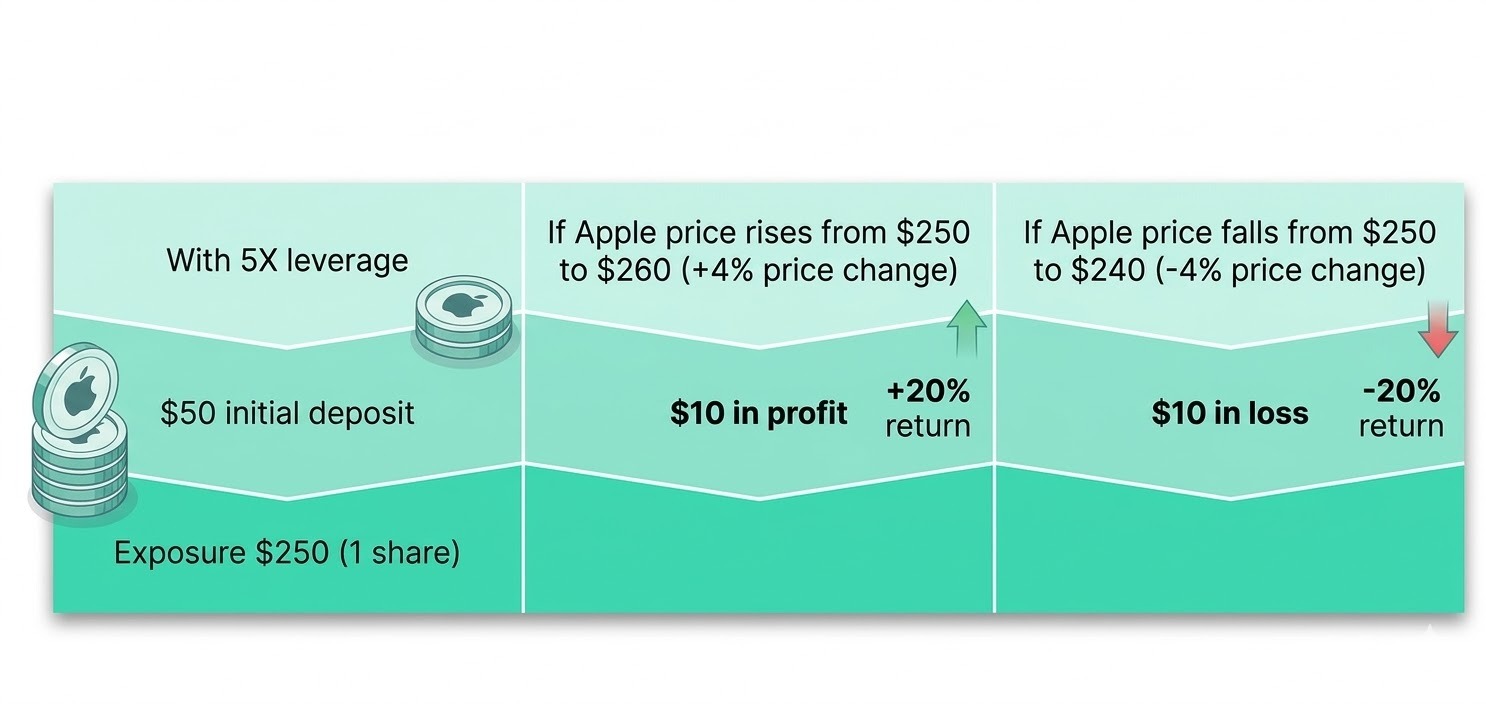
Let’s assume that you believe the stock price of Apple will rise from $250 to $260. You can open a long CFD position to speculate on the price. To manage risk, you decide on a leverage of 5x, which means your initial margin will only need to be 20% of the total value. For simplicity’s sake, let’s assume you purchase one share of Apple at $250.
You put up the initial deposit of $50, and the trade is now live. If the Apple share price rises to $260, you can exit the position for a profit of $10. While the trade would have generated a return of only 4% if you had bought the share itself, the leverage has instead increased your return to 20% since you only put up $50 at the beginning of the trade.
Conversely, if the price of Apple had fallen to $240 when you exited your CFD position, you would end up losing $10. In this case, the 5x leverage would mean that you end up with a negative 20% return instead of -4%. As such, it is important to note that leverage on CFD contracts can amplify both profits and losses.
What is Futures Trading?
Futures are trading derivatives that allow traders to purchase or sell an asset at a predetermined price and date. Futures are standardized contracts that are traded on regulated exchanges.
There are two types of futures. Some of them are settled in cash, while others allow you to own an underlying market. For some major futures contracts, cash settlement is an option. For others, you are legally obligated to take or make delivery when the contract ends.
Futures contracts have fixed parameters that are set and governed by the centralized exchanges on which they trade, such as the CME Group or ICE. Market participants (including banks, trading firms, and institutional investors) must adhere to these standardized specifications. Futures typically cover everything from commodities like oil and gold to indices and currencies.
Futures Example
Let’s assume you have decided to trade oil futures. West Texas Intermediate (WTI) is the most common crude oil futures contract that currently trades on the CME Group NYMEX exchange.
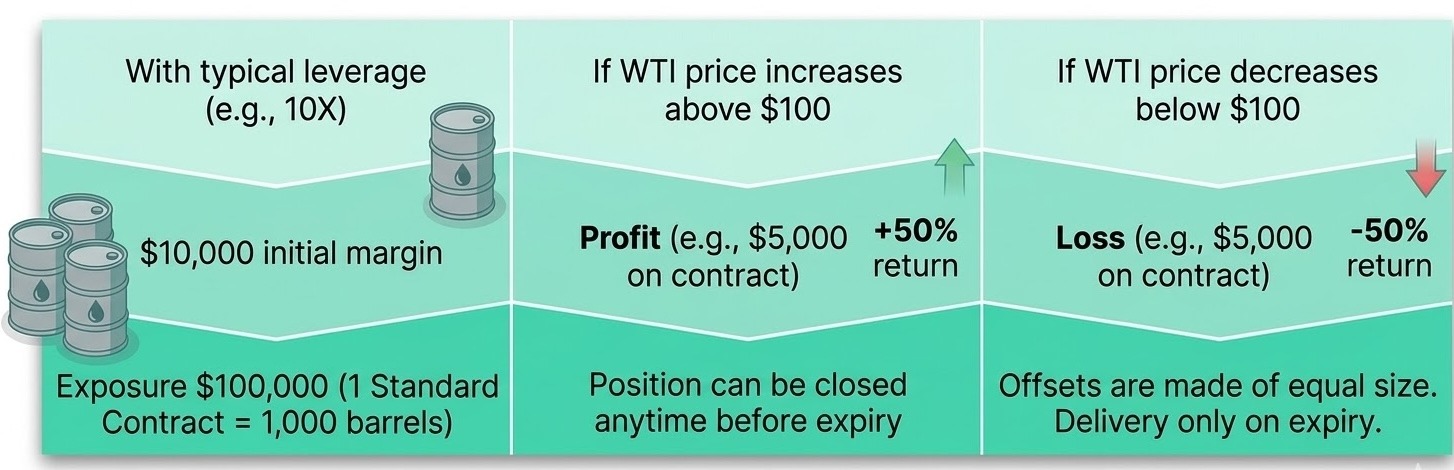
If WTI Crude is currently trading at $100 and you believe the price at the end of the month will be above that, you can purchase a standard contract for 1,000 barrels at a fixed price of $100. Note that the price is for a single barrel, meaning that at $100, a single contract is worth $100,000.
Your broker will require you to put up an initial margin, which will dictate your leverage. Typical leverage for futures contracts ranges from 5x to 20x. If the price of the underlying commodity increases, you will see a profit (and vice versa).
It is not necessary to hold futures contracts until their expiration dates. Usually, traders close their position at the current market price well before the contract ends. If you close your position in WTI before the expiration date, you do so by entering an offsetting trade of equal size. The net gain or loss is then credited or debited to your account. Only if you hold the contract through to expiry are you obligated to take physical delivery of the 1,000 barrels.
CFDs and Futures - Which is Right for You?
Both CFDs and futures are similar in many ways. They often track the same markets, offer leverage, allow long/short positions, and have deep liquidity.
However, the two contracts also differ significantly. Here are the key benefits of both:
Benefits of Trading CFDs
CFDs offer a host of benefits over futures. For one, you can access global markets from a single broker. Since you do not need to own the underlying asset, CFDs provide streamlined access to global equities, commodities, currencies, and even crypto - all from a single account, without the need to hold the underlying asset or navigate separate market-specific requirements.
CFDs also typically allow for higher leverage, which means that they allow you to invest with a lower initial margin. For example, Change offers up to 30x leverage for forex and up to 20x for commodities. Take a look at Change’s CFD offerings to trade 360+ CFDs.
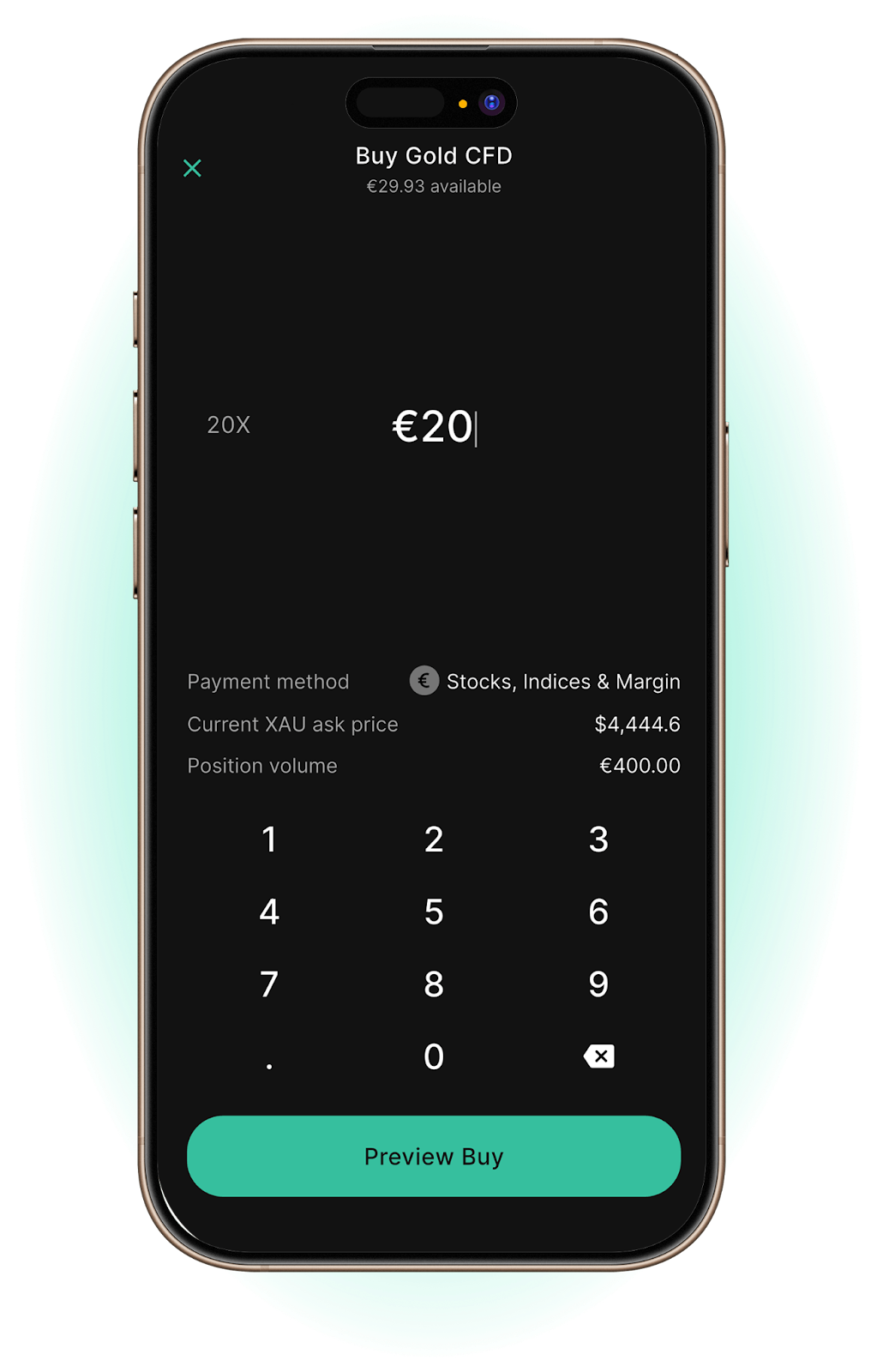
Since a CFD contract has no fixed expiration date, it provides a lot more flexibility to the trader. Short-term traders can close positions within a few minutes, while those focused on a long-term trading strategy can hold positions indefinitely. Futures have a fixed expiration date, which means traders must either close or roll over their position to the next contract before expiry. While this adds an extra step compared to CFDs, it does not limit potential profit.
CFDs also offer flexible position sizing. New traders can often invest with as little as €10. CFDs also sometimes offer fractional positions, allowing you to own a small part of a stock. This makes CFDs ideal for traders with low capital. Futures contracts are typically much larger in size and require a sizable initial investment.
Trading costs on CFDs are often much lower compared to futures. Many brokerages offer zero-fee trading, building the costs into the spread itself. However, keeping a position open overnight often incurs an additional fee. Trading futures usually involves exchange fees and commissions that add to the trading costs.
Benefits of Trading Futures
Futures enjoy certain benefits over CFDs that make them better suited to experienced traders and institutions. For example, futures contracts are standardized, and their size makes them ideal for traders looking to invest large amounts of capital.
Futures provide regulated access to markets. This means that, unlike CFDs, price discovery is a much easier process due to transparent order books and tighter spreads. Since CFDs are priced by the brokers themselves, counterparty risk can be a problem due to price shading and slippage.
Futures are regulated across the world - in the US by the CFTC and NFA, while in Europe they fall under the EMIR (European Market Infrastructure Regulation) framework, with oversight coordinated by ESMA and enforced by national regulators such as BaFin in Germany, the AMF in France, or the AFM in the Netherlands. In the UK, futures regulation falls under the FCA, which operates independently since Brexit. This means that the futures markets provide a rule-based trading environment. This leads to fixed initial and maintenance margin levels, usually determined by the exchange. While this can be a limiting factor for some traders, it can also help mitigate risk.
It is important to note that CFD trading is not available to retail traders in the US. The SEC and CFTC do not permit US-regulated brokers to offer CFDs to retail clients, and most offshore brokers refuse to open accounts for US residents as a result.
Both CFDs and futures provide leveraged access to financial markets. And while both of them have pros and cons, CFDs are generally better for newer traders while futures cater to institutions and experienced traders.
Most traders should probably start with CFD trading due to its flexibility and lower entry requirements. Once traders have a grasp of market conditions and how global events impact price movements, they can consider switching to futures. Start your CFD trading journey with Change to access hundreds of CFDs from equities and forex to commodities and crypto.
Frequently Asked Questions
Here are some of the most commonly asked questions regarding CFD and futures trading.
Do both CFDs and futures carry risk?
Both CFDs and futures carry significant risks. However, traders with a lower risk tolerance can utilize CFDs to better align risk with their trading goals. CFDs can mitigate risks by offering customizable leverage, lower margin requirements, and lower clearing fees.
How do expiration dates differ for CFDs and futures?
Futures have fixed expiration dates that traders must adhere to. CFDs have no fixed expiry date, giving traders more flexibility. However, holding a CFD position overnight incurs daily financing fees, which can make long-term holding costly. Some commodity CFDs may also have roll dates tied to the underlying futures contract. However, you should note that CFDs carry overnight financing fees if they are held after the trading day ends.
Are CFDs better than futures?
Both CFDs and futures have their pros and cons. However, many believe that CFDs are better for new/intermediate traders working with less capital, while futures are more suited to professional traders with access to significant capital.