The S&P 500 has delivered a 16.9% annualised return since 2015, and while past performance is not a guarantee, it remains a reliable indicator, placing it at the top among major stock market indexes worldwide. It has outperformed major indices in Europe, Brazil, India, and Vietnam, and even the UK market, prompting many investors to ask how to invest in S&P 500.
The attraction for European investors is simple, especially as markets rise over time. Over two decades, the Euro Stoxx 50 has returned less than half the S&P 500's annualized return. The long-term compounding edge has proved difficult to ignore, even when market declines or currency fluctuations are taken into account.
However, a retail investor cannot invest directly in the S&P 500 index; instead, they need to find an instrument that tracks its performance. An Exchange-Traded Fund (ETF), one of the most popular index funds that tracks the S&P 500, is the best vehicle for these investments.
In this guide, we will discuss how you can start your journey investing in the most prominent stock index in the world.
Key Takeaways
- European investors can access the S&P 500 through UCITS ETFs, S&P 500 CFDs, or platforms offering fractional exposure to US stocks and other investments.
- EU regulations mean you cannot buy or sell US-domiciled ETFs directly, but UCITS-compliant alternatives provide the same exposure in a tax-efficient structure.
What is the S&P 500?
The S&P 500 is the largest stock index in the world, with a market capitalisation of over $62 trillion, reflecting its dominance in the global stock market. The index tracks the share prices of 500 of the largest publicly traded companies in the US stock market, reflecting the overall health of the economy.
The index lists stocks across various industries, from AI and technology to health care, including conglomerates like Berkshire Hathaway, covering a wide range of sectors. Most of the companies listed on the S&P 500 are popular and the largest public companies, such as NVIDIA, Netflix, Apple, and Amazon.
For a stock to qualify for inclusion in the S&P index, it must meet certain criteria, including being a highly liquid US-domiciled company with an unadjusted market capitalisation of at least $22.7 billion. A company will be removed from the S&P 500 if it no longer qualifies.
Three Ways to Access the S&P 500 From Europe
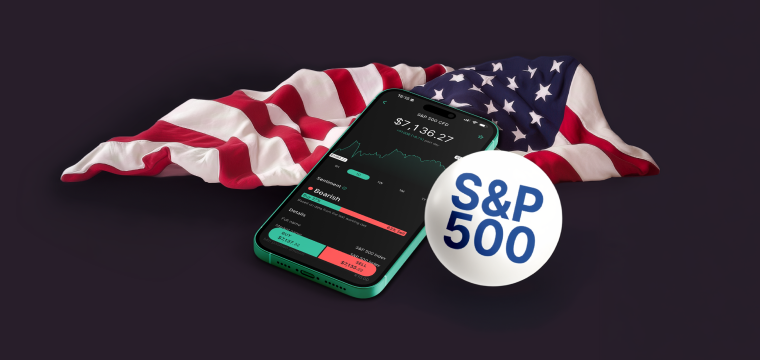
You cannot invest directly in the S&P 500 index itself; instead, you need to find a product that tracks its performance.
Due to MiFID II regulations in Europe and the EU-wide PRIIPS framework (which makes a KID (Key Information Document) that conforms to EU standards a prerequisite for legally purchasing most US-domiciled ETFs, such as the popular SPY, you are not able to easily buy or sell these as a retail investor within Europe.
UCITS-compliant equivalents that track the same index and provide similar, often superior tax treatment have emerged in the European fund industry.
1. Via an ETF tracking the S&P 500
In Europe, UCITS ETFs are investors' primary long-term route to investing in the S&P 500. These are EU-regulated funds that are registered in Ireland or Luxembourg and listed on most EU-regulated investment platforms. Buying ETFs gives you ownership of units in a regulated fund, making them a cost-effective option for beginner investors.
The largest S&P 500 ETF by fund size in Europe:
EUR-hedged versions are also available for investors who wish to avoid currency risk. Although you may need to pay higher fees because they have a slightly higher annual charge, these help minimise the effects not just of costs but also of changes in EUR/USD over time on your performance.
When choosing an ETF, keep the expense ratio in mind: lower ratios are generally preferable because they reduce investment-related costs.
2. Via S&P 500 CFDs
Instead of actually purchasing the ETF or underlying stocks themselves, you can gain exposure to price movement through trading Contracts for Difference (CFDs) on the S&P 500. That makes them useful for investors who want to trade the index actively, respond to US market events in real time, sell positions quickly, or use leverage, although leverage significantly increases risk and should be approached cautiously.
Instead of purchasing a UCITS ETF, you can gain direct exposure to the US market through Contracts for Difference (CFDs). Modern platforms like Change Invest offer flexible leverage - you can trade with 1:1 leverage to simply mirror the price movement of US stocks without the complexities of owning the underlying fund, or utilise up to 20:1 leverage on major indices (in line with ESMA rules) if you are an experienced active trader.
This path is more appropriate for active traders than long-term, passive types.
3. Via Fractional Shares - buy individual stocks
Many platforms provide fractional access to individual companies in the US stock market, meaning you can buy and sell individual shares of companies like Apple, Microsoft, Amazon, Coca-Cola, etc., for just €10. You can make a basket of these individual shares to replicate the performance of the S&P 500.
While buying individual stocks requires more active management than a single ETF, it allows you to build a highly targeted portfolio of the S&P 500 companies you understand and trust the most.
Change makes this accessible without a high minimum investment, and you can gradually buy individual shares of US companies to build US equity exposure over time, seamlessly combining it with other assets like crypto, forex, and commodities on a single platform.
Comparison Table
How to Invest in the S&P 500 Step by Step
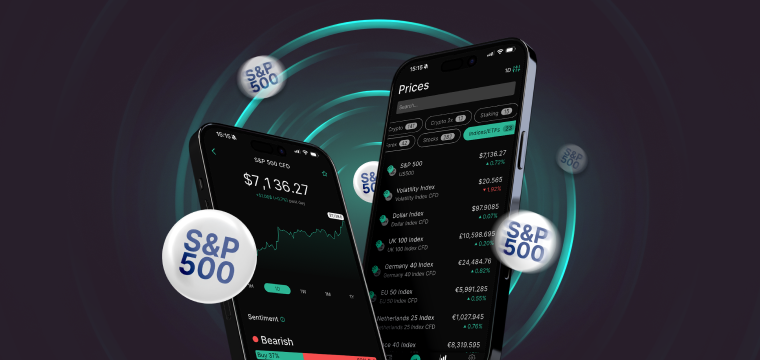
It is straightforward to invest in the S&P 500 via the above investment instruments. Here is the step-by-step guide:
Step 1: Choose your method
As a European investor, you have got three effective methods to invest in the S&P 500 index. However, choosing one of these will entirely depend on your strategy, goals and risk appetite.
Those seeking long-term growth through passive investing can opt for UCITS ETFs, while active traders who want to trade short- to mid-term movements can opt for CFDs. However, if you want a personalised stock portfolio, you can choose the fractional-share method.
Step 2: Select a regulated platform
When investing in overseas assets through a share-dealing platform or a general investment account, security and regulation are key factors. Look for brokers licensed under MiFID II or regulated by national EU financial authorities (AFM, EFSA, BaFin).
Step 3: Fund your account and order
Many platforms like Change have a minimum deposit as low as €10, so you can add money to your account as you wish. Most platforms accept card funding or bank transfer, with same-day availability.
After adding funds to your account, place a buy or sell order after reviewing the trade before the market closes. Once the order is confirmed, you are invested in the S&P 500, and the value of investments may rise to generate income or fall depending on market value movements.
Step 4: Set up a recurring investment
Good brokers generally offer ways to automate the monthly investment of a fixed amount in select assets, enabling consistent investing. This helps with long-term strategy by removing emotional decision-making from the process.
Final Thoughts
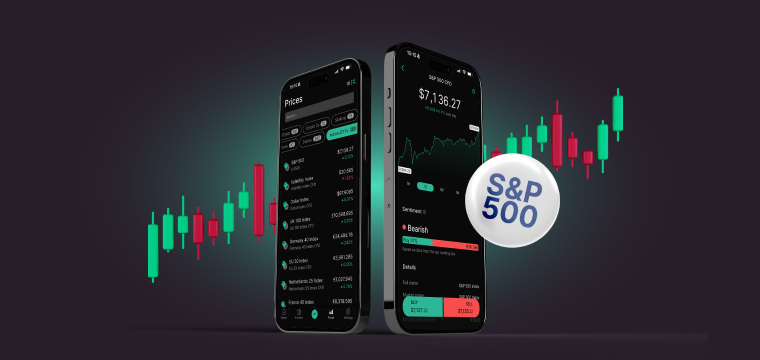
Investing in the S&P 500 from Europe is no longer complicated; the infrastructure is in place, the regulation is solid, and the barriers to entry are lower than most people assume.
What matters most in 2026 is choosing a strong platform that makes the process simple, transparent, and sustainable for you personally. Start your journey with Change, which provides clear EU regulation, clear fee structures, and tools that support your strategy.
Frequently Asked Questions
1. Can Europeans invest in the S&P 500?
Yes, European investors can access the S&P 500 through UCITS-compliant ETFs, S&P 500 CFDs, or fractional shares via any EU-regulated investment platform.
2. What is the best S&P 500 ETF or mutual fund for European and UK investors?
The iShares Core S&P 500 UCITS ETF (CSPX) and Vanguard S&P 500 UCITS ETF (VUAA) are the most widely held options, offering low fees, full index exposure, and EU regulatory compliance.
3. How much money do I need to invest in the S&P 500 from Europe?
You can start with as little as €10 on most EU-regulated share dealing platform options that offer fractional shares or fractional ETF units.
4. Is it safe to invest in the S&P 500 index funds from Europe?
Investing through an EU-regulated platform under MiFID II provides strong legal protections, including transparent pricing and the segregation of client funds.
5. Do EU investors pay tax on S&P 500 gains on an investment account?
Yes, tax treatment varies by country and tax year, but Ireland-domiciled UCITS ETFs reduce US dividend withholding tax from 30% to 15%, and accumulating share classes can defer additional tax liability depending on your local rules.